Homemade Fresh Pasta from Scratch Recipe
Introduction
Making homemade pasta from scratch is easier than you might think, and the results are deliciously fresh and satisfying. This recipe uses a blend of flours and eggs to create a smooth, elastic dough perfect for rolling and shaping. Whether you have a pasta roller or prefer to roll by hand, this method will elevate your pasta dishes.
Ingredients
- 3 cups all-purpose flour
- 3 cups semolina or 00 flour (all-purpose flour can be substituted)
- 6 large eggs
- 1 tablespoon olive oil
- Pinch of salt
- 3/4 cup water (or more, as needed)
Instructions
- Step 1: In the bowl of an electric mixer fitted with a dough hook attachment, combine the flours, eggs, olive oil, salt, and water. Beat on medium-low speed for 5 to 10 minutes until a soft, smooth ball of dough forms. If the dough feels too dry, add more water as needed. It should feel elastic and slightly tacky.
- Step 2: On a lightly floured surface, knead the dough 3 to 4 times just until it comes together.
- Step 3: Wrap the dough tightly in plastic wrap and let it rest at room temperature for at least one hour, or refrigerate overnight. Bring to room temperature before using.
- Step 4: Attach the pasta roller to your stand mixer and set the thickness to setting #1.
- Step 5: Divide the dough into 4 equal pieces on a lightly floured surface.
- Step 6: Working with one piece at a time, turn the mixer to speed 2 and feed the dough through the roller to knead it, lightly flouring as needed to prevent sticking. Fold the dough in half and roll again, repeating until smooth.
- Step 7: Adjust the roller to thickness setting #2 and feed the dough through, repeating once.
- Step 8: Change the setting to #3 and feed the dough through again, repeating once.
- Step 9: Set the roller to thickness #4 and feed the dough through, repeating once. Turn off the mixer.
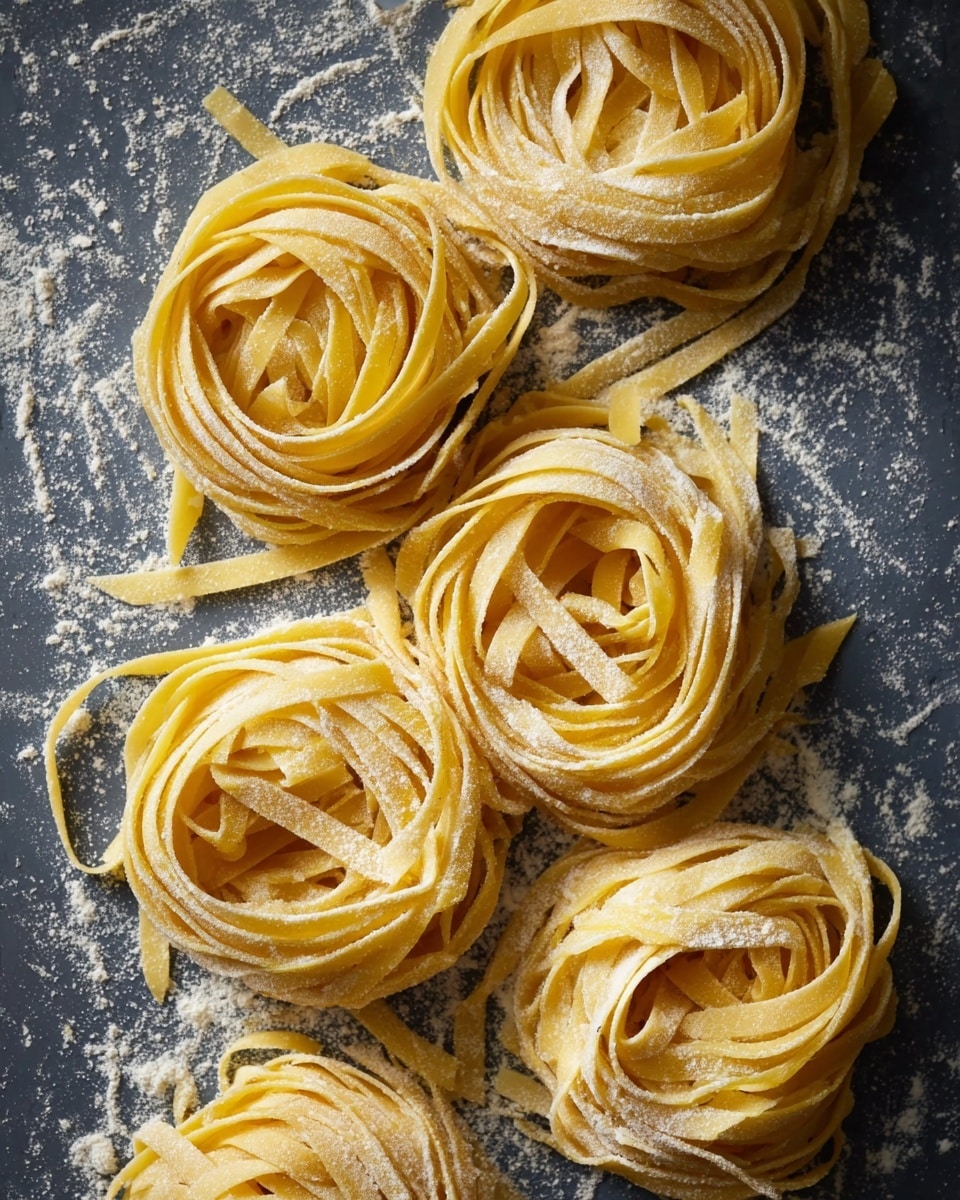
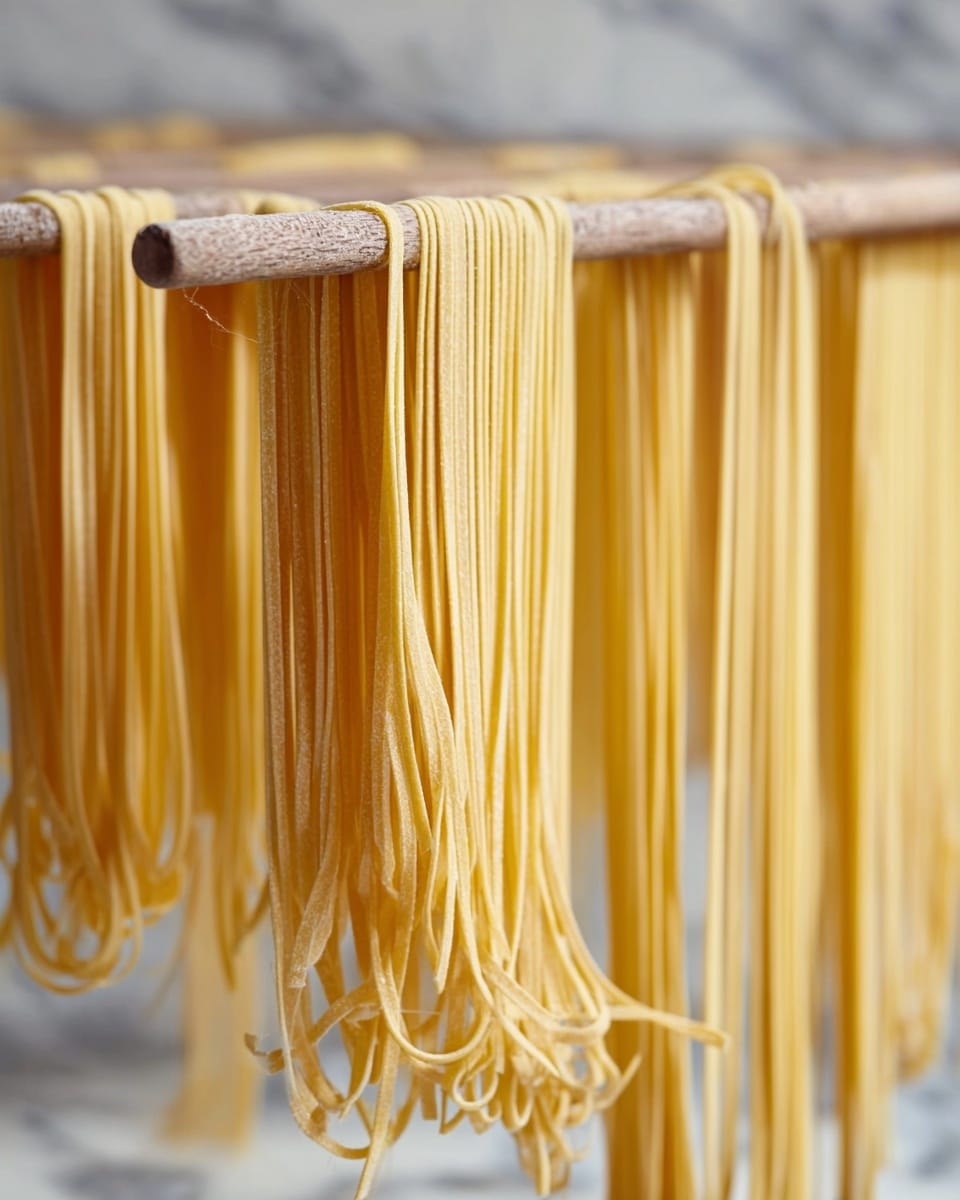
- Step 10: Attach the fettuccine cutter and turn the mixer on speed 4. Feed the dough through the cutter and carefully arrange the pasta on a drying rack. Let it dry for 30 minutes, dusting lightly with flour to avoid sticking.
- Step 11: Transfer the dried pasta to an airtight container. Store in the refrigerator for up to 2 days or freeze for up to 2 weeks.
Tips & Variations
- Substitute all all-purpose flour if semolina or 00 flour is unavailable, but semolina adds a nice texture and bite.
- If you don’t have a stand mixer, you can knead the dough by hand until smooth—about 10 minutes.
- Adjust the water gradually to get the right dough consistency; it should be soft but not sticky.
- Try adding herbs or spices to the dough for extra flavor.
Storage
Store fresh homemade pasta in an airtight container in the refrigerator for up to 2 days. For longer storage, freeze the pasta in a sealed container or freezer bag for up to 2 weeks. To reheat, cook frozen pasta directly in boiling salted water, adding a minute or two to the usual cooking time.
How to Serve
Serve this delicious recipe with your favorite sides.
FAQs
Can I make this pasta dough without a stand mixer?
Yes, you can mix and knead the dough by hand on a floured surface. It will take a bit longer but produces the same wonderful results.
How can I prevent the pasta from sticking together?
Lightly flour your dough and pasta pieces as you roll and cut them. When drying, use a rack if possible, and make sure the strands are well spaced and dusted with flour to avoid clumping.
PrintHomemade Fresh Pasta from Scratch Recipe
This homemade pasta recipe combines all-purpose and semolina or 00 flour with eggs, olive oil, and a pinch of salt to create a soft, elastic dough. Using a stand mixer with specialized attachments, the dough is kneaded, rolled, and cut into fresh fettuccine pasta. The resulting pasta can be dried and stored refrigerated or frozen for later use, offering a delicious and authentic base for a variety of Italian dishes.
- Prep Time: 15 minutes
- Cook Time: 0 minutes (no cooking required for dough preparation)
- Total Time: 1 hour 15 minutes (including dough resting and drying time)
- Yield: 4 servings (approximately 1 pound of fresh pasta) 1x
- Category: Pasta
- Method: No-Cook
- Cuisine: Italian
Ingredients
Dry Ingredients
- 3 cups all-purpose flour
- 3 cups semolina or 00 flour (all-purpose flour can be substituted)
- Pinch of salt
Wet Ingredients
- 6 large eggs
- 1 tablespoon olive oil
- 3/4 cup water (or more, as needed)
Instructions
- Mix Ingredients: In the bowl of an electric mixer fitted with a dough hook attachment, combine the all-purpose flour, semolina or 00 flour, eggs, olive oil, salt, and water. Beat on medium-low speed for 5-10 minutes until a soft, smooth ball of dough forms. If the dough is too dry, gradually add more water until the dough feels elastic and slightly tacky.
- Knead Dough: Transfer the dough to a lightly floured surface and knead it 3-4 times until it comes together evenly and smoothly.
- Rest Dough: Wrap the dough tightly in plastic wrap and let it rest at room temperature for at least one hour. Alternatively, refrigerate overnight but allow it to come to room temperature before proceeding.
- Prepare Pasta Roller: Attach the pasta roller attachment to a KitchenAid® Stand Mixer and set the thickness to setting #1.
- Divide Dough: On a lightly floured surface, divide the rested dough into 4 equal pieces to make handling easier.
- Roll Dough: Working with one piece at a time, turn the mixer on to speed 2 and feed the dough through the pasta roller to knead it further, lightly flouring to prevent sticking. Fold the dough in half and roll again, repeating until the dough is smooth.
- Adjust Thickness: Gradually increase the thickness setting on the roller to #2, #3, and then #4, feeding the dough through the roller at each setting and repeating once per setting for uniform thinness.
- Cut Pasta: Replace the roller with the fettuccine cutter attachment, turn the mixer to speed 4, and feed the smooth dough sheet through to cut into fettuccine strands.
- Dry Pasta: Carefully arrange the cut pasta on a drying rack. Let it air dry for 30 minutes, dusting lightly with flour as needed to prevent sticking.
- Store Pasta: Transfer the dried pasta into an airtight container. Store it in the refrigerator for up to 2 days or freeze for up to 2 weeks for future use.
Notes
- The combination of all-purpose and semolina or 00 flour gives the pasta the right texture and elasticity; substitute all-purpose flour entirely if necessary.
- If the dough feels too sticky when rolling or cutting, sprinkle more flour to prevent sticking.
- Allowing the dough to rest improves gluten development and makes rolling easier.
- Fresh pasta cooks faster than dried pasta, so adjust cooking times accordingly when using it in recipes.
Keywords: homemade pasta, fresh fettuccine, pasta dough, Italian pasta recipe, pasta roller, fresh pasta drying