Homemade Ramen Noodles Recipe
Introduction
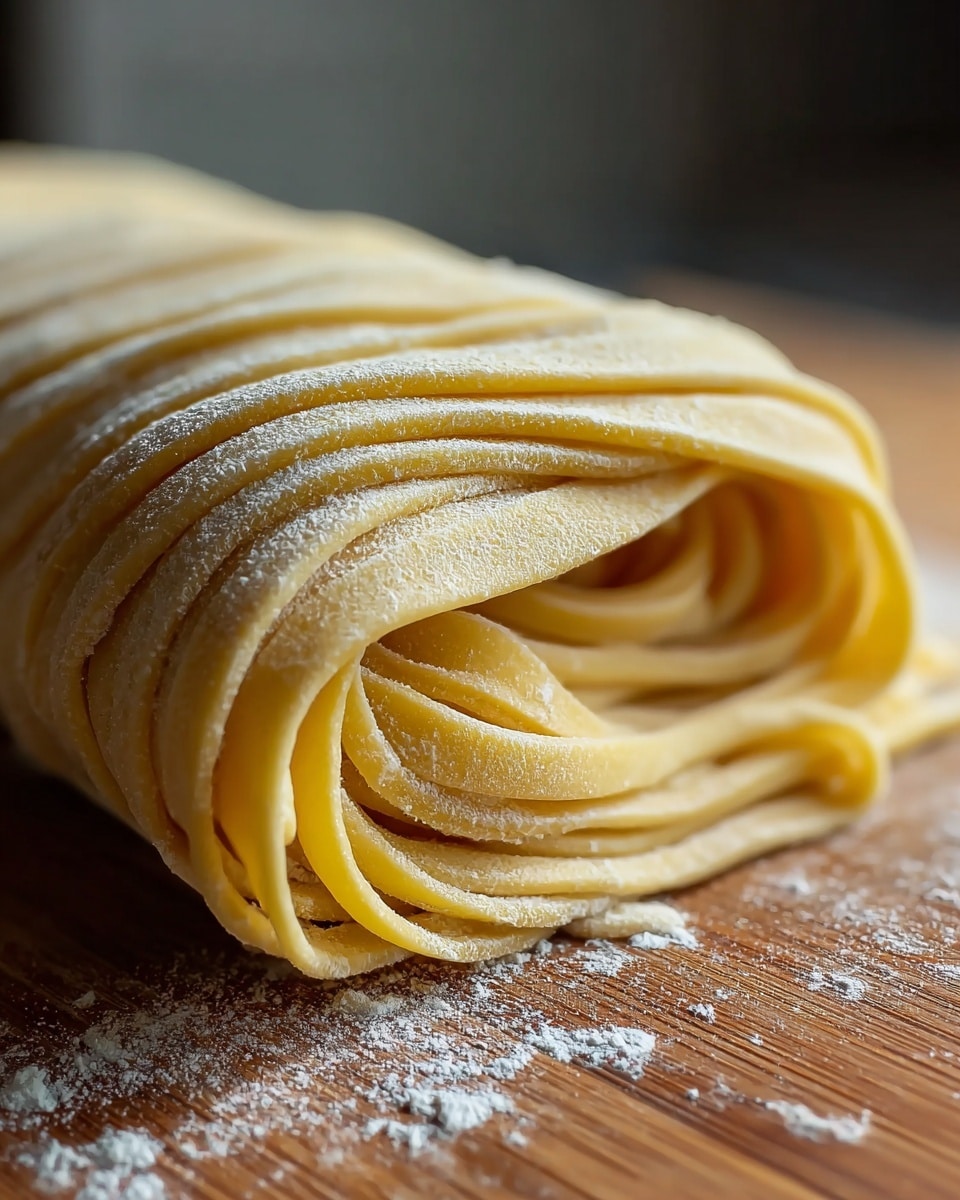
Making your own ramen noodles at home is simpler than you might think and brings an authentic touch to your bowl. These homemade noodles are chewy, fresh, and perfect for soaking up flavorful broths. Let’s walk through an easy recipe that anyone can try.
Ingredients
- 2 cups all-purpose flour
- 1/2 teaspoon salt
- 1/2 teaspoon baking soda
- 2/3 cup water
- Cornstarch for dusting
Instructions
- Step 1: In a large bowl, combine the flour, salt, and baking soda. Mix thoroughly to ensure the baking soda and salt are evenly distributed.
- Step 2: Gradually pour in the water while stirring continuously until a slightly sticky dough forms.
- Step 3: Transfer the dough to a floured surface and knead for about 5 minutes until smooth and elastic.
- Step 4: Wrap the dough in plastic wrap and let it rest at room temperature for 30 minutes to hydrate and relax the gluten.
- Step 5: Roll out the rested dough as thin as possible. Use a sharp knife or pasta cutter to slice it into thin strips about 1/8-inch wide, or to your preferred thickness.
- Step 6: Lightly dust the noodles with cornstarch to prevent sticking, especially if you won’t cook them immediately.
- Step 7: Bring a large pot of water to a rolling boil. Add the noodles and cook for 3 to 4 minutes until tender but still firm. Drain and rinse with cold water to stop the cooking process.
Tips & Variations
- For extra chewiness, try substituting half the all-purpose flour with bread flour.
- If you want a richer flavor, add a teaspoon of kansui or substitute baking soda with baked baking soda for a traditional alkaline taste.
- Roll the dough between sheets of parchment paper for easier handling and less flour use.
Storage
Fresh ramen noodles are best cooked immediately but can be stored in an airtight container dusted with cornstarch in the refrigerator for up to 2 days. To freeze, spread noodles on a tray to freeze individually, then transfer to a freezer bag and use within 1 month. Cook from frozen by adding an extra minute or two to the boiling time.
How to Serve
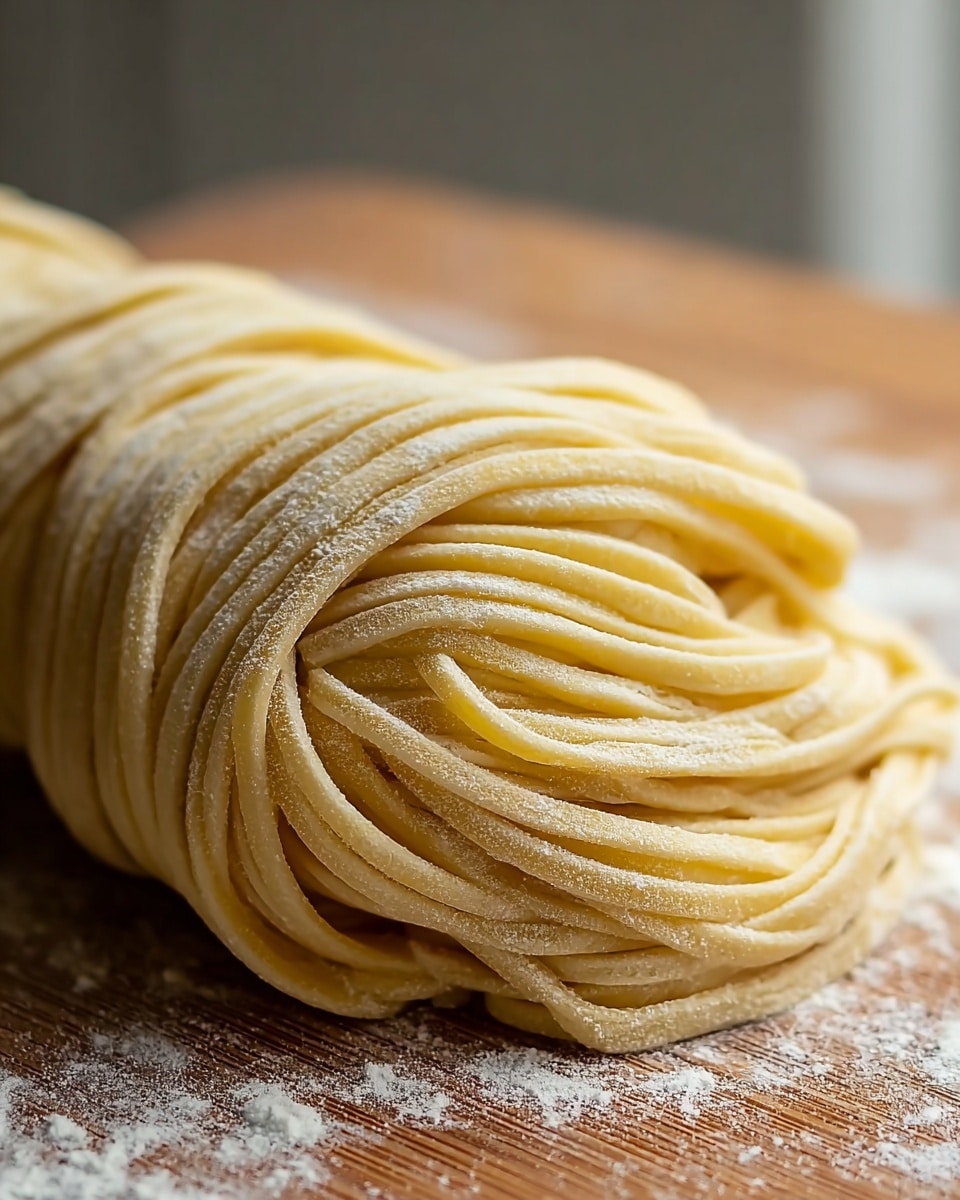
Serve this delicious recipe with your favorite sides.
FAQs
Can I make ramen noodles without baking soda?
Baking soda gives ramen noodles their characteristic texture and slight alkalinity. Without it, the noodles will be more like standard pasta but you can still enjoy them. For the closest effect, try using baked baking soda or kansui if available.
How thin should I roll out the dough?
Ideally, roll the dough as thin as you can—about 1/8-inch thick. This allows the noodles to cook quickly while maintaining a nice chew, typical of ramen noodles.
PrintHomemade Ramen Noodles Recipe
This Homemade Ramen Noodles recipe guides you through making fresh, chewy ramen noodles from scratch using simple pantry ingredients like all-purpose flour, baking soda, and salt. The dough is kneaded, rested, rolled thin, cut into strips, and boiled to perfection, resulting in authentic, tender noodles perfect for your favorite ramen soup or stir-fry dishes.
- Prep Time: 10 minutes
- Cook Time: 4 minutes
- Total Time: 44 minutes
- Yield: 4 servings 1x
- Category: Noodles
- Method: Stovetop
- Cuisine: Japanese
- Diet: Vegetarian
Ingredients
Dry Ingredients
- 2 cups all-purpose flour
- 1/2 tsp salt
- 1/2 tsp baking soda
Wet Ingredients
- 2/3 cup water
Other
- Cornstarch for dusting
Instructions
- Mix Dry Ingredients: In a large bowl, combine the flour, salt, and baking soda. Ensure they are well-mixed for even distribution of the baking soda and salt.
- Add Water Gradually: Slowly pour in the water, stirring continuously, until a dough begins to form. The dough should be slightly sticky but manageable.
- Knead the Dough: Transfer the dough onto a floured surface. Knead it for about 5 minutes until it becomes smooth and elastic. This develops the gluten, which gives the noodles their characteristic chewiness.
- Rest the Dough: Wrap the dough in plastic wrap and let it rest for 30 minutes at room temperature. This resting period allows the flour to fully hydrate and the gluten to relax, making it easier to roll out.
- Roll and Cut the Dough: After resting, roll the dough out as thin as possible. Use a sharp knife or a pasta cutter to slice it into thin strips. The thickness and width are up to preference, but traditionally, ramen noodles are about 1/8-inch wide.
- Dust with Cornstarch: Lightly dust the noodles with cornstarch to prevent them from sticking together. This step is crucial if you’re not cooking them immediately.
- Cook the Noodles: Bring a large pot of water to a rolling boil. Add the noodles and cook for 3-4 minutes. They should be tender yet firm to the bite. Drain and rinse under cold water to stop the cooking process.
Notes
- Use baking soda to mimic the alkaline quality of kansui water traditionally used in ramen noodles, which gives them their distinctive chewiness and yellow color.
- Resting the dough is essential to relax the gluten and allow easier rolling and shaping.
- Dusting with cornstarch prevents the noodles from sticking if not cooked immediately.
- Rinse cooked noodles under cold water to stop the cooking process and remove excess starch.
- Adjust noodle thickness and width according to personal preference.
Keywords: homemade ramen noodles, ramen noodle recipe, fresh ramen noodles, Japanese noodles, easy ramen dough