Olive Bread Recipe
Introduction
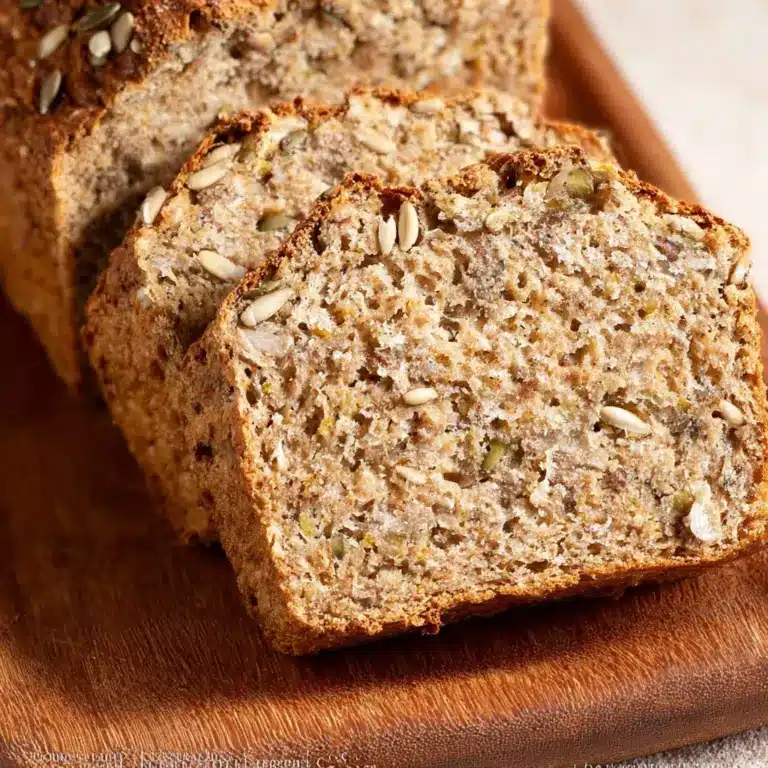
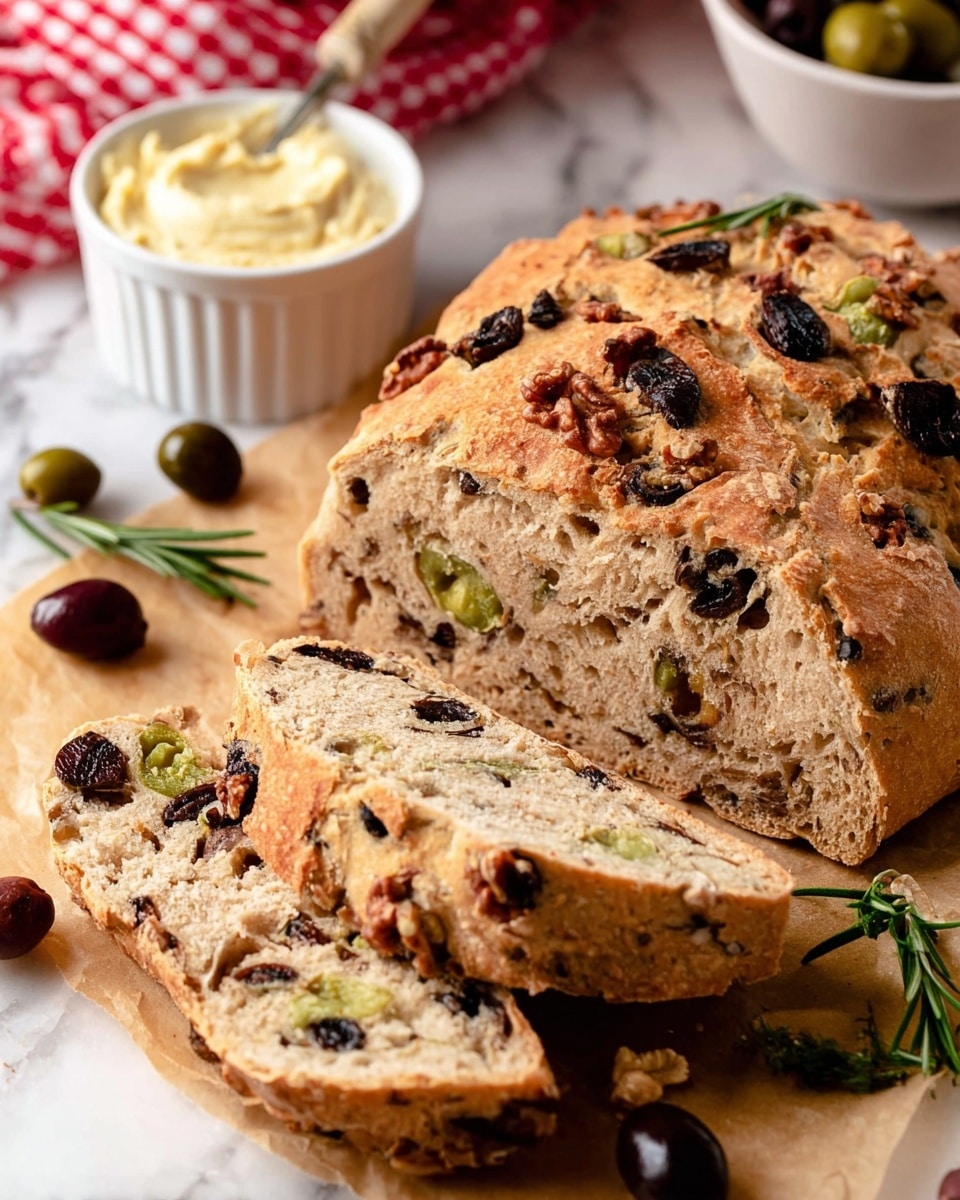
This olive bread is a savory, flavorful loaf packed with a mix of green, black, and Kalamata olives, complemented by fresh rosemary and crunchy walnuts. It’s a moist, tender bread perfect for sandwiches or enjoying with a drizzle of olive oil.
Ingredients
- 2 cups self-rising flour
- 1/2 cup almond milk
- 2 tablespoons mild-flavor olive oil
- 1/3 cup dairy-free yogurt
- 1 teaspoon fresh rosemary, chopped (or 1/2 teaspoon dried rosemary)
- 1/3 cup walnuts, finely chopped
- 1/2 cup green olives, sliced or roughly chopped
- 1/2 cup black olives, sliced or roughly chopped
- 1/2 cup Kalamata olives, sliced or roughly chopped
- 1/4 teaspoon salt
Instructions
- Step 1: Preheat the oven to 400°F (200°C). Line a baking sheet with parchment paper and lightly oil it with cooking spray. Set aside.
- Step 2: Chop the olives on a cutting board to your preferred size, either sliced or roughly chopped. Set aside.
- Step 3: In a mixing bowl, combine the self-rising flour, almond milk, olive oil, dairy-free yogurt, fresh rosemary, chopped walnuts, all chopped olives, and salt.
- Step 4: Using a rubber spatula, stir the ingredients together. The batter will be heavy and sticky—that’s normal. Stir and press with the spatula to fully incorporate everything. If the dough feels too wet, add a little extra flour, but keep it sticky, as it won’t form like traditional bread dough.
- Step 5: Transfer the sticky dough onto the prepared baking sheet and use the spatula to push it down.
- Step 6: Oil your hands and gently pat the dough into an oval shape about 8 inches by 2 inches (20 cm by 5 cm). A flatter loaf bakes more evenly and quickly than a tall one, so avoid using a loaf pan.
- Step 7: Bake the bread on the middle rack at 400°F (200°C) for 35 minutes. Then reduce the oven temperature to 350°F (180°C) and bake for an additional 10–12 minutes, until the crust is golden brown and a pick inserted into the bread comes out clean.
- Step 8: Let the bread cool on a wire rack for 3 hours or preferably overnight before slicing to allow it to set fully.
Tips & Variations
- Use mixed olives according to your preference, but make sure to remove any pits before chopping to avoid any accidents while eating.
- Add a pinch of dried chili flakes for a subtle heat that complements the olives.
- For a nut-free version, simply omit the walnuts or substitute with sunflower seeds.
- Brush the loaf with olive oil before baking for a shinier crust and extra moisture.
Storage
Store the olive bread wrapped tightly in plastic wrap or in an airtight container at room temperature for up to 2 days. For longer storage, slice and freeze the bread, then toast or warm slices directly from the freezer. Reheat gently in the oven to maintain its texture and flavor.
How to Serve
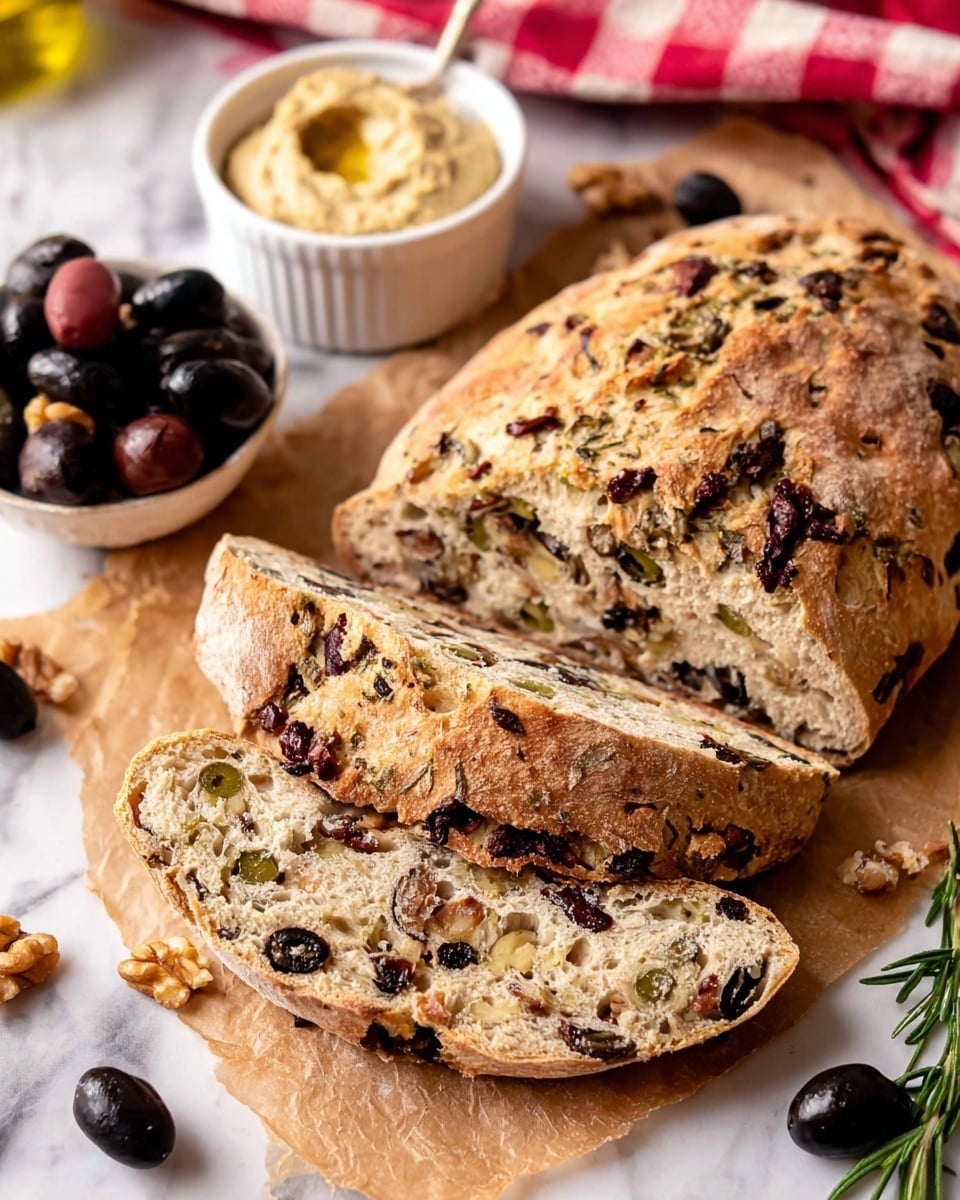
Serve this delicious recipe with your favorite sides.
FAQs
Can I use all-purpose flour instead of self-rising flour?
Yes, you can substitute all-purpose flour by adding 1 1/2 teaspoons of baking powder and 1/2 teaspoon of salt per 2 cups of flour to mimic self-rising flour.
Is this recipe vegan?
Yes, this olive bread is vegan as it uses almond milk and dairy-free yogurt, along with olive oil instead of butter.
PrintOlive Bread Recipe
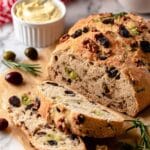
This Olive Bread is a flavorful, rustic loaf made with self-rising flour, almond milk, and a medley of chopped green, black, and Kalamata olives, combined with crunchy walnuts and fresh rosemary. Perfectly baked to a golden brown crust with a soft, sticky interior, this dairy-free and vegan-friendly bread is ideal for sandwiches, serving alongside soups, or enjoying as a savory snack.
- Prep Time: 15 minutes
- Cook Time: 45 minutes
- Total Time: 3 hours 15 minutes (including cooling time)
- Yield: 1 loaf (approximately 8-inch x 2-inch log) 1x
- Category: Bread
- Method: Baking
- Cuisine: Mediterranean
- Diet: Vegan
Ingredients
Dry Ingredients
- 2 cups Self-Rising Flour
- 1 teaspoon Fresh Rosemary (chopped, or 1/2 teaspoon dried rosemary)
- 1/3 cup Walnuts (finely chopped)
- 1/4 teaspoon Salt
Wet Ingredients
- 1/2 cup Almond Milk
- 2 tablespoons Mild-Flavor Olive Oil
- 1/3 cup Dairy-Free Yogurt
Olives
- 1/2 cup Green Olives (sliced or roughly chopped)
- 1/2 cup Black Olives (sliced or roughly chopped)
- 1/2 cup Kalamata Olives (sliced or roughly chopped)
Instructions
- Preheat Oven: Preheat the oven to 400°F (200°C). Line a baking sheet with parchment paper and lightly oil the paper using cooking oil spray. Set aside.
- Prepare Olives: Chop the green, black, and Kalamata olives on a chopping board using a sharp knife. The size can be slices or rough chops, according to preference. Set aside.
- Mix Ingredients: In a large mixing bowl, combine the self-rising flour, almond milk, olive oil, dairy-free yogurt, fresh rosemary, chopped walnuts, and all the chopped olives.
- Combine Dough: Using a rubber spatula, stir the ingredients together thoroughly. The dough will be heavy and sticky, which is expected. If the mixture feels too wet, add a little extra flour, but keep it sticky—not a firm, kneadable dough.
- Shape Dough on Baking Sheet: Use the rubber spatula to push the sticky dough onto the prepared baking sheet.
- Form Loaf Shape: Oil your hands lightly and pat the dough into an oval shape. Aim for an approximately 8-inch by 2-inch (20 cm x 5 cm) log. Avoid using a loaf pan to ensure proper baking time and crust texture.
- Bake Bread: Bake the bread on the middle rack at 400°F (200°C) for 35 minutes. Then reduce the oven temperature to 350°F (180°C) and bake for an additional 10-12 minutes until the crust is golden brown and a knife or skewer inserted comes out clean.
- Cool Completely: Remove the bread from the oven and let it cool on a wire rack for at least 3 hours or preferably overnight before slicing. This resting time helps the texture set properly.
Notes
- This recipe uses self-rising flour, which contains leavening agents, so no additional baking powder or yeast is needed.
- Use mild-flavor olive oil to avoid overpowering the bread’s taste.
- The dough is sticky and heavy, not a traditional bread dough you knead by hand.
- Cooling the bread completely before slicing ensures cleaner cuts and better texture.
- You can adjust the olive types and quantities according to your preference.
Keywords: olive bread, vegan bread, dairy-free bread, Mediterranean bread, savory bread, walnut bread, homemade bread