Vegan Naan Recipe
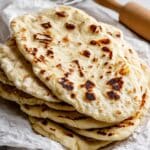
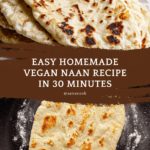
This Vegan Naan recipe offers a soft, fluffy, and flavorful Indian flatbread made entirely plant-based. Using simple pantry staples like all-purpose flour, plant-based milk, and olive oil, this naan is perfectly tender with a slight char from stovetop cooking in a cast iron pan. It’s an ideal accompaniment to curries, soups, or can be enjoyed on its own with dips. The dough rests and rises to develop perfect texture without any dairy or eggs, making it suitable for vegans and those seeking dairy-free bread options.
- Prep Time: 15 minutes
- Cook Time: 20 minutes
- Total Time: 3 hours 35 minutes
- Yield: 8 naan breads 1x
- Category: Bread
- Method: Stovetop
- Cuisine: Indian
- Diet: Vegan
Ingredients
Scale
Dough Ingredients
- ¾ cup warm water
- 1 teaspoon instant yeast
- 1 teaspoon sugar
- 2 cups all-purpose flour
- 1 teaspoon salt
- 1 tablespoon baking powder
- 3 tablespoons plant-based milk (soy milk works best)
- 1 teaspoon apple cider vinegar
- 5 tablespoons olive oil (divided)
Instructions
- Activate Yeast: Add the warm water to a cup and mix in the yeast and sugar until fully dissolved. The water should be comfortably warm (around 110°F) so the yeast can activate without dying. Cover and set aside for 5 minutes until foamy.
- Mix Dry Ingredients: In a large bowl, whisk together the flour, salt, and baking powder to combine well. Set aside.
- Prepare Plant Milk Mixture: In a separate small cup, mix the plant-based milk with the apple cider vinegar. Stir well until the mixture thickens slightly, resembling buttermilk.
- Combine Wet Ingredients: Once the yeast mixture is foamy, add the plant milk mixture and 2 tablespoons of olive oil. Mix thoroughly to combine all wet ingredients.
- Form Dough: Pour the wet ingredients into the bowl with the dry ingredients. Using a spatula, mix well until a sticky, slightly broken down dough forms.
- Knead Dough Lightly: Lightly flour a clean surface and transfer the dough there. Knead gently for about 6 turns, incorporating any small chunks into a uniform dough. Add a tablespoon of flour if dough is too sticky. Form the dough into a loose ball without overworking.
- First Rise: Add 2 tablespoons of olive oil into a clean bowl, coating the inside. Place the dough ball in the bowl and coat it with 1 tablespoon of olive oil on top. Cover with a warm, damp towel and let rise in a warm place for 3 hours, until doubled or tripled in size.
- Divide Dough: After rising, flour your work surface again. Remove dough from bowl gently and knead slowly for about 40 seconds. Shape into a ball and divide into 8 equal portions. Form each into a small ball and rest for 10 minutes.
- Preheat Pan: Heat a large cast iron skillet over medium heat for 2 minutes to ensure it’s hot enough for cooking the naan.
- Roll Out Dough Balls: Take one dough ball and place it on a floured surface. Using a rolling pin, roll out as thinly as possible without tearing the dough. The thinner the naan, the better the texture and cooking.
- Cook First Side: Place the rolled dough onto the hot cast iron pan. Cook for about 20 seconds, then gently lift the edge to check the underside. Look for golden spots and light charring. Expect bubbles to form quickly.
- Flip and Cook Other Side: Flip the naan and cook for an additional 10-20 seconds until golden with some lightly charred spots. Remove from pan.
- Repeat and Serve: Continue rolling out and cooking remaining dough balls. Keep cooked naan warm by placing them in a toaster oven set to low heat or wrapping them in a clean kitchen towel. Once cooled, store in an airtight container.
Notes
- Warm water temperature is crucial to activate yeast without killing it; aim for about 110°F.
- Do not over-knead the dough to keep naan soft and tender.
- Using a cast iron pan helps achieve traditional charring and texture similar to tandoor-cooked naan.
- Soy milk is recommended for best results as a plant-based milk substitute.
- Allowing the dough to rise for 3 hours enables proper fermentation and flavor development.
- Roll the dough thinner for a lighter naan with nice bubble formation.
- Serve naan warm for the best texture and flavor experience.
Keywords: vegan naan, plant-based naan, Indian bread, vegan flatbread, dairy-free naan, homemade naan
Find it online: https://www.sanacooks.com/vegan-naan-recipe/